



 Acorn AI: Game Testing Agent
Game Testing Redefined by Scalable Computing – No-Code Automation, 300% Efficiency Gains
Acorn AI: Game Testing Agent
Game Testing Redefined by Scalable Computing – No-Code Automation, 300% Efficiency Gains
Learn More
Pricing

From March 9 to 13, 2026, the 38th Game Developers Conference (GDC 2026) was held at the Moscone Center in San Francisco. As the world’s largest and most influential event for the industry, this year’s GDC attracted over 30,000 attendees, 400+ exhibitors, and featured more than 700 sessions, once again serving as the ultimate bellwether for gaming technology.
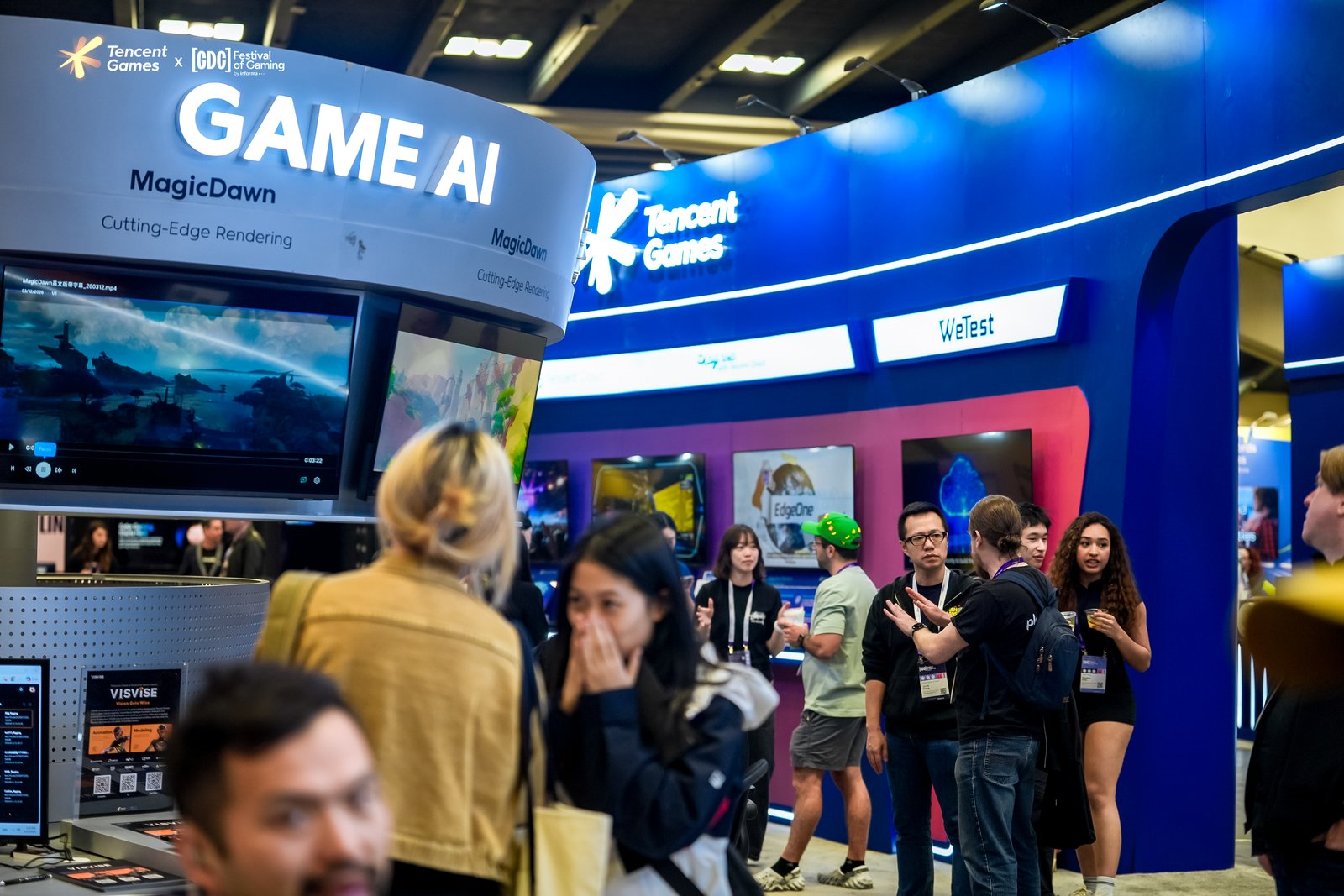
At this year's conference, AI was undoubtedly the most prominent theme. From content generation and player experience optimization to intelligent NPC interactions and automated testing, AI is fundamentally reshaping every stage of game development. WeTest showcased its latest AI Automated Testing Solution, demonstrating the innovative practice of "replacing manual labor with scalable computing power," which garnered significant attention from global developers.
During several roundtable discussions at GDC 2026, "testing efficiency" was frequently cited as a primary pain point. As game content grows exponentially—featuring vast open worlds, intricate mechanics, and frequent updates—traditional manual testing is hitting a wall.
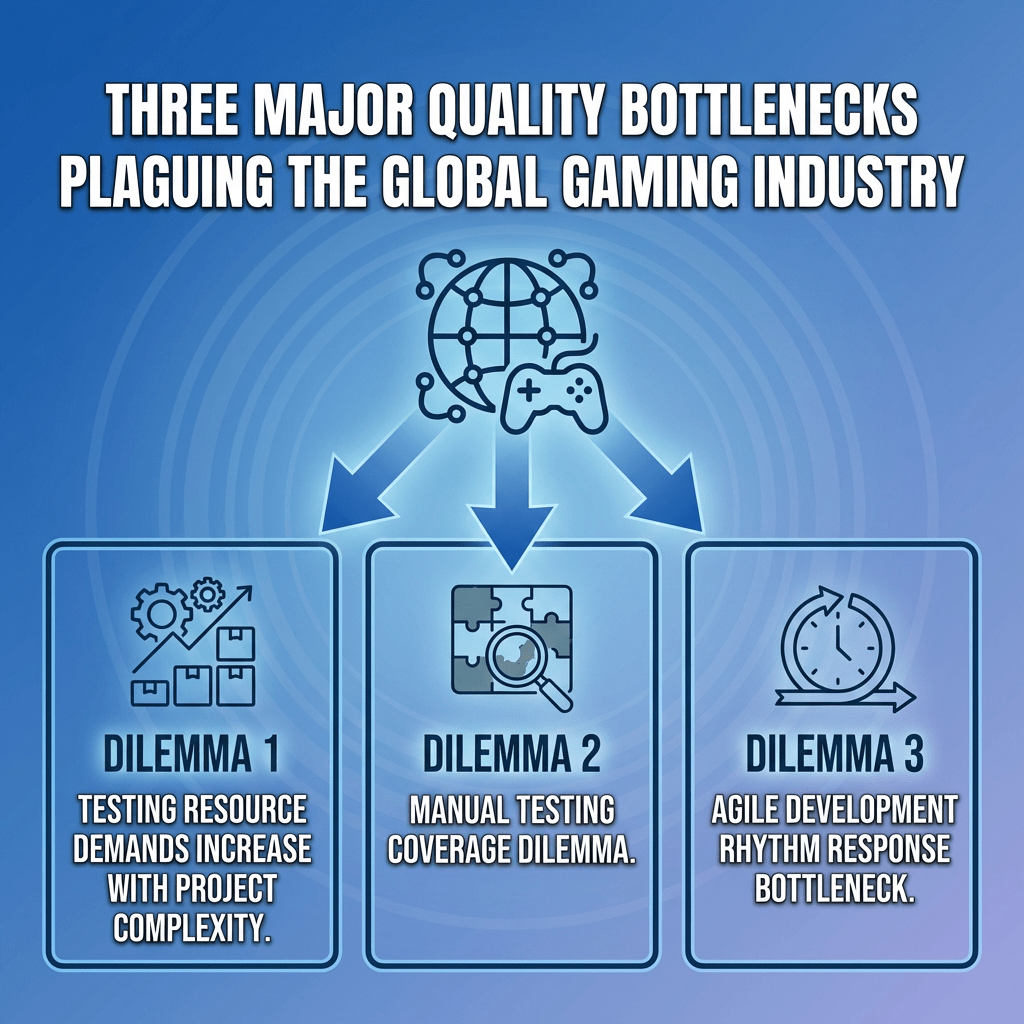
"Our game map has tripled in size and characters have increased by 50%, but the demand for testing resources has grown fivefold," remarked a AAA producer from Europe. As content expands, the investment required for testing rises sharply. While expanding QA teams can provide temporary relief, costs continue to climb, and efficiency gains eventually reach a plateau.
Manual testing cannot exhaustively cover all edge cases and complex interactions. Stochastic bugs are difficult to reproduce, and root cause analysis often relies heavily on the individual experience of testers. Statistics show that traditional manual test coverage rarely exceeds 40%, leaving a vast number of edge scenarios and anomalies unverified.
Modern games iterate rapidly (weekly or even daily), but traditional testing lags behind. Regression testing often takes days or weeks, becoming the primary bottleneck for version releases and severely hindering the realization of agile delivery.
In response to these pain points, WeTest officially showcased its latest AI Automated Testing Solution at GDC 2026. This is more than just a tool; it is a comprehensive AI Test Agent Platform designed to "scale quality production through computing power and build sustainable, intelligent capacity."
The defining innovation of the WeTest solution is that it is not a single AI model or a linear script, but an "Intelligence Hub" where multiple specialized agents collaborate. This architecture solves the "uncontrollability" and "non-reproducibility" issues inherent in traditional AI testing.
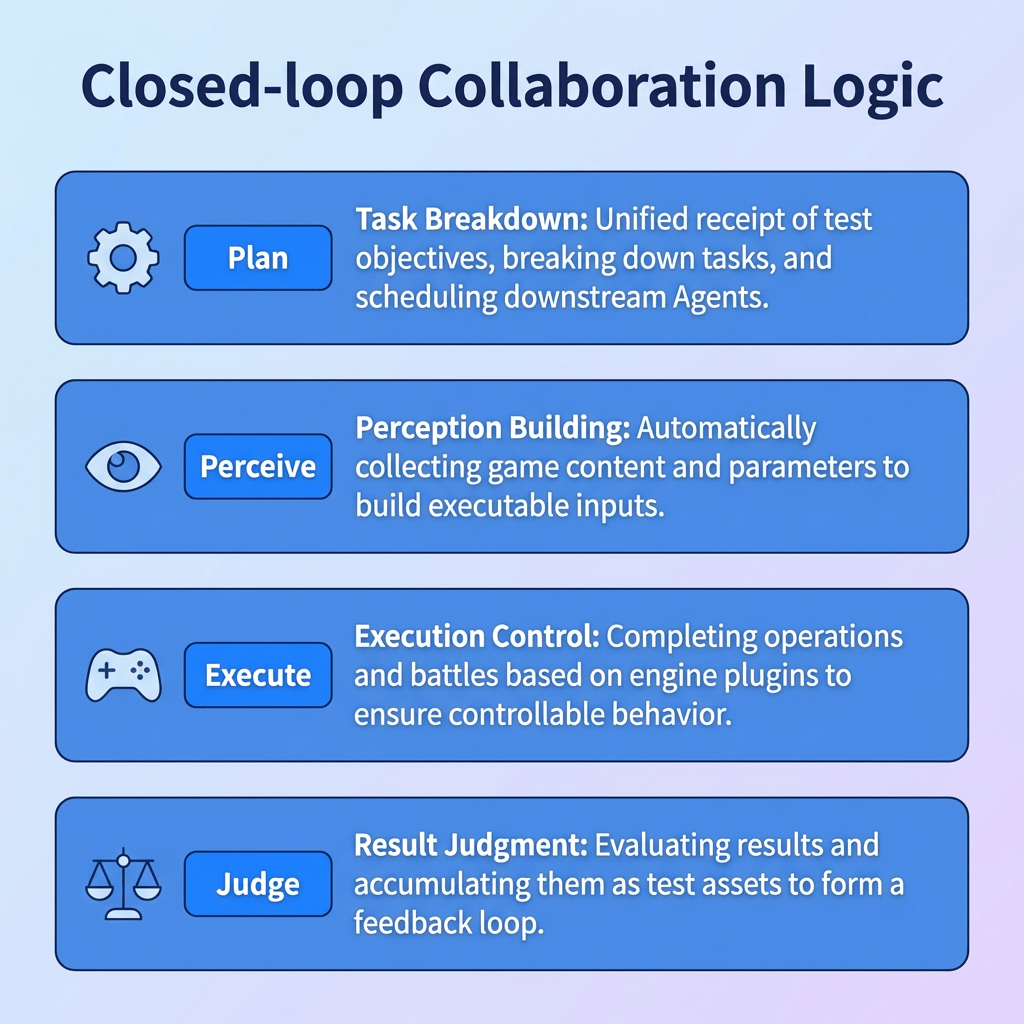
Plan (Task Decomposition Layer): Receives high-level testing objectives, intelligently decomposes complex tasks, and dispatches them to downstream agents. Much like a senior test architect, it can break down a "Full Regression" goal into hundreds of executable cases.
Perceive (Environment Sensing Layer): Automatically collects game content and parameters to build executable inputs. It "understands" the UI, identifies elements, and senses game states like a human tester, providing precise environmental context.
Execute (Execution Control Layer): Performs actions and combat via engine plugins to ensure deterministic behavior. Unlike "black-box" reinforcement learning, this layer uses engine constraints to ensure every action is predictable and reproducible.
Judge (Result Determination Layer): Evaluates results and archives them as test assets to form a feedback loop. It intelligently determines "Pass/Fail," clusters defects, and generates standardized reproduction paths.
"Our design philosophy is to simplify complexity, mitigate risk, and allow for independent evolution," stated the WeTest Technical Lead. "By decomposing testing into a scalable AI execution system where each agent has a clear boundary, we avoid the unpredictability of large monolithic models."
Real-time combat is the most challenging scenario in game testing, requiring both millisecond-level responsiveness and high-level strategic decision-making.
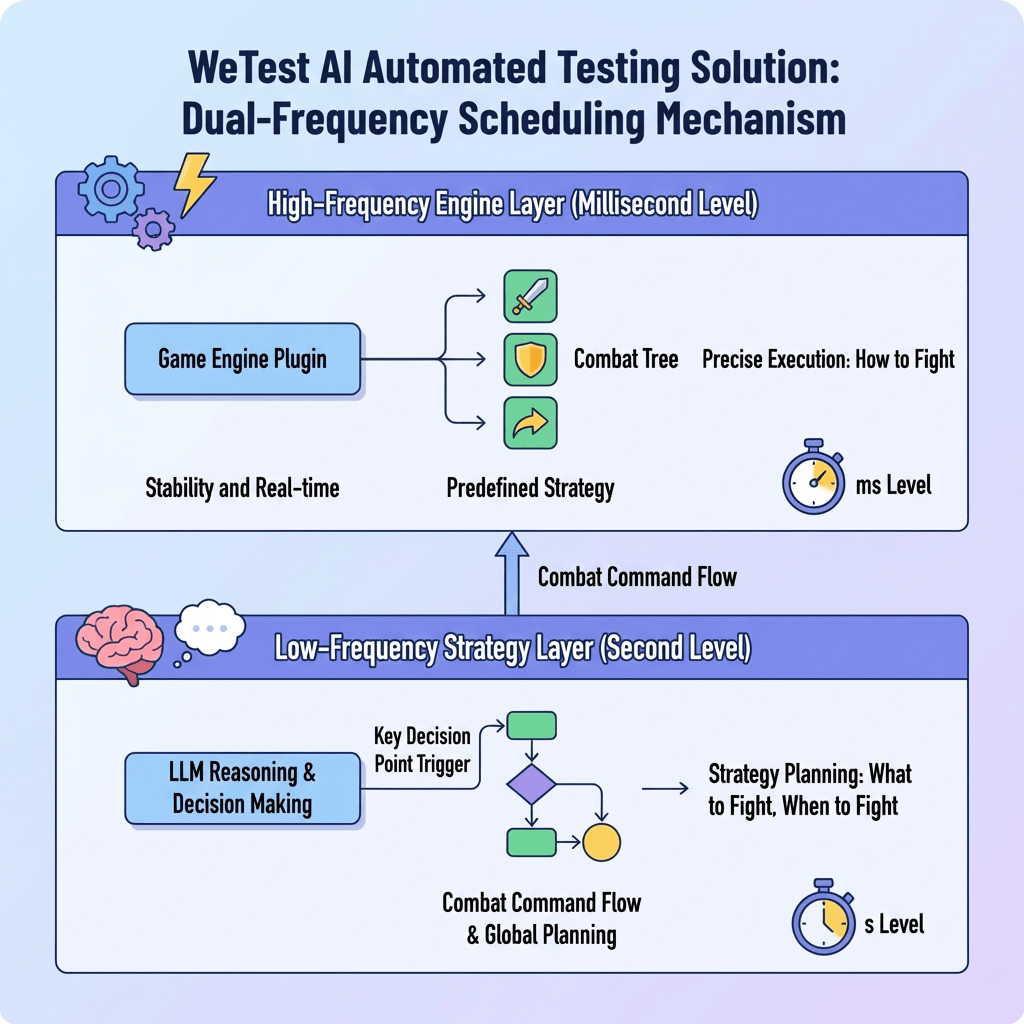
High-Frequency Engine Layer (ms): Executes via engine plugins to ensure action stability and real-time performance. It handles "How to fight" through pre-defined behavior trees for precise skill casting and positioning.
Low-Frequency Strategy Layer (sec): Utilizes LLM (Large Language Model) inference for critical decision points. It handles "What to fight" and "When to act" by generating command streams that the high-frequency layer then executes faithfully.
This decoupled design drastically reduces the cost of expensive LLM computations. In multi-machine parallel scenarios, the LLM is only called once during the generation phase, and the resulting command stream can be reused by multiple execution units, optimizing computing costs by dozens of times.
From Technical Innovation to Product Realization: Full-Lifecycle Automation
WeTest demonstrated a complete closed-loop workflow at GDC, showing how AI delivers value in real-world scenarios:
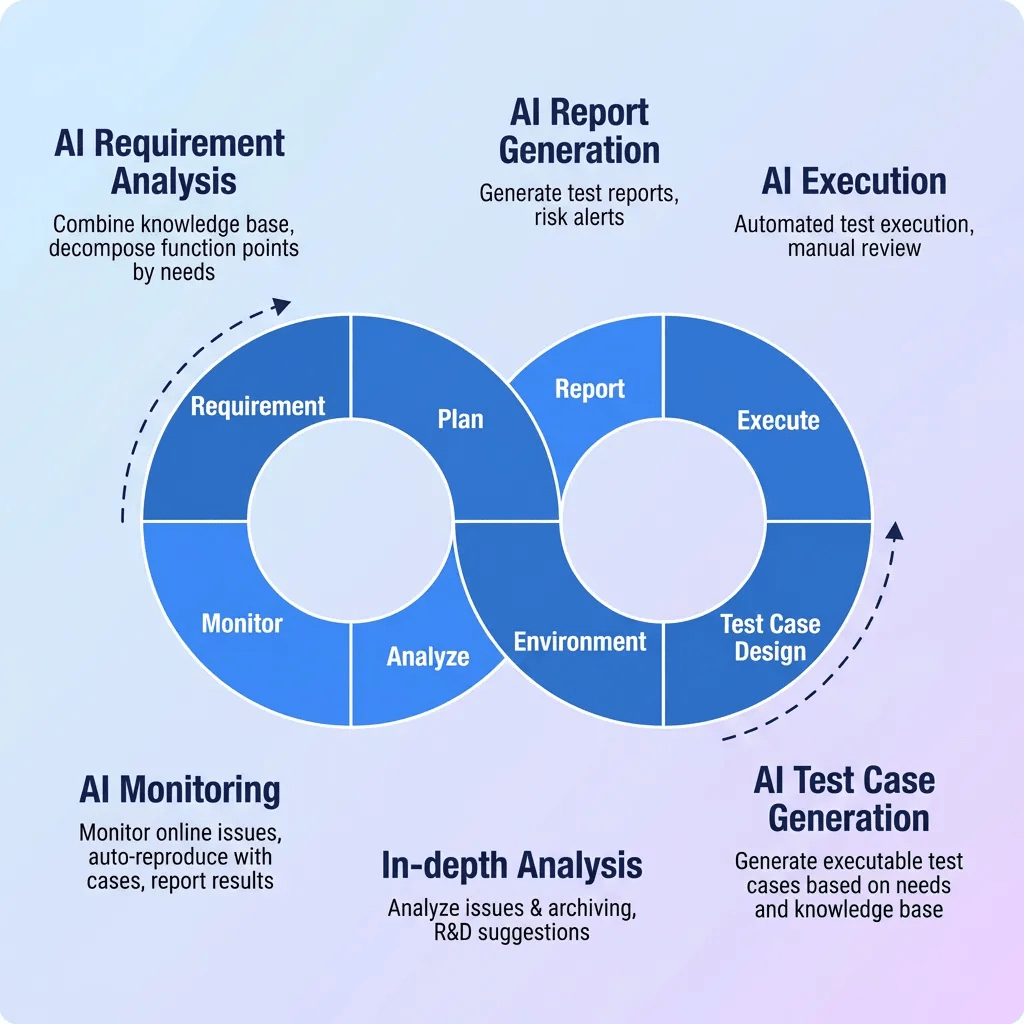
Case Generation: AI significantly lowers the barrier to entry. Testers can describe requirements in natural language or upload product documents. The system automatically parses these into structured test cases and visual assertions, drastically shortening design and verification prep time.
Defect Management: The platform automatically aggregates similar issues and correlates them with specific tasks and devices. Combined with screen recordings and logs, it creates a complete traceability chain, enhancing the efficiency of reproduction and collaborative debugging.
Intelligent Analysis: The system leverages historical data to perform root cause analysis, impact assessment, and priority recommendations. This elevates testing from mere "execution" to "intelligent analysis," creating a sustainable quality improvement loop.
Throughout GDC 2026, the WeTest booth maintained a constant stream of visitors—developers, publishers, and QA providers eager to experience this revolutionary platform.
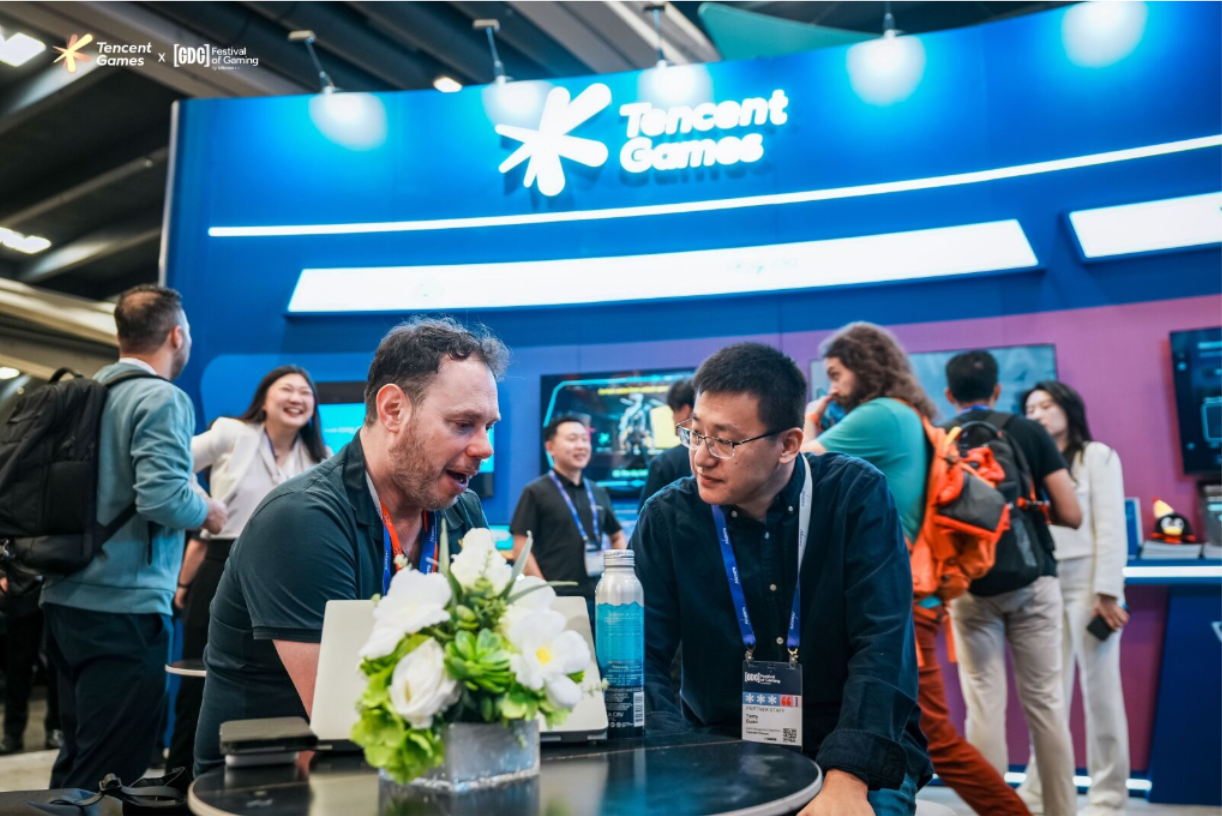
"What impresses me most is the controllability," said a European QA Lead. "The problem with traditional AI testing is the 'black box'—you don't know why it made a decision, and you can't replicate it. WeTest has solved this through Multi-Agent collaboration and engine constraints."
By breaking down complexity into controllable loops and balancing stability with intelligence, WeTest has achieved more than just a technical breakthrough; it has triggered a revolution in testing philosophy. From an internal tool within Tencent to a global quality assurance platform, WeTest has spent over a decade refining this runnable, reusable, and extensible AI testing engineering system.
As the theme of GDC 2026, "Change the Game," suggests, AI is altering every facet of development. In the critical field of Quality Assurance, WeTest has already provided the answer.
Acorn AI: Game Testing Agent
Game Testing Redefined by Scalable Computing – No-Code Automation, 300% Efficiency Gains 
